|
News 2002-2004
July 2004:
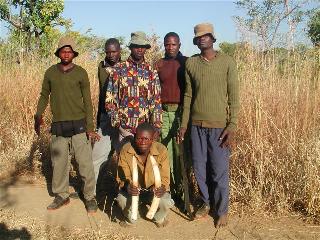
In a joint operation of the W.A.G. with the Department of National Parks and Wildlife, the scouts, assisted by a ranger of the Department, have
arrested a local poacher who had caught a juvenile elephant in a snare that was set for buffalo. The poacher is handed over to the Salima police and is due to be charged under the
Wildlife Act soon. Hopefully the message will go around that the anti-poaching efforts of the W.A.G. have to be taken seriously: prevention is the best protection.
November 2002-April 2003:
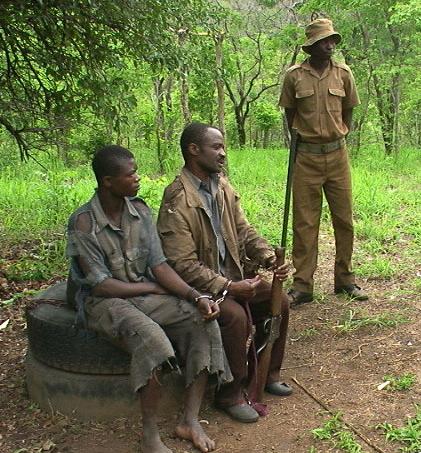
The Dutch volunteer Albert Schenk stayed in Thuma Forest Reserve as field manager and gave additional training to the
scouts. On average they were out on patrol 6 out of 7 days. In this half year they found and confiscated 131 snares, closed several pit traps and had to arrest 68 'small and
big' poachers, among them 4 professional illegal woodcutters and two gun poachers.
They also managed to do several 3-days patrols to the far West of Thuma where locals illegally cut down trees to make charcoal on a
large scale. This was the first time the W.A.G. could show regular presence in the West.
The road network was extended with several kilometers and quite a lot of time was needed to keep the electric fence free of all vegetation, popping out of the ground during the
rainy season.
The elephants were regularly seen, often close to the main camp.
Volunteer Claudia Biese stayed for 7 weeks in Thuma and did very useful surveys (with GPS) of the streams running through Thuma.
September 2002:
The almost 14 km of electric fence are up and working in Thuma Forest Reserve and the elephants haven't crossed the eastern
boundary anymore. Volunteer Claudia Biese has been surveying and checking the fence line together with the WAG scouts for the last seven weeks.
July 2002:
The German Embassy in Malawi, the organization "Rettet die Elefanten Afrikas e.V." from
Germany and DIMON Malawi have co-financed 10 km of electric fence for the eastern boundary of Thuma Forest Reserve, where elephants used to raid crop and are under
threat by the local community. The material for the fence has already arrived from South Africa and the fence-line is being cleared at the moment. We hope that the fence will be up
in about 4 weeks. The surrounding community is welcoming and supporting this action.
The Wildlife Action Group would like to thank the donors of the electric fence very much for their support and quick
response.
June 2002:
Hippopotamus along the shores of Lake Malawi are under tremendous pressure due to habitat loss. They are threatened by
increasing human settlement, fishermen and agricultural development that has destroyed much of the wetland habitat on which Hippos rely on.
In January 2002 the Wildlife Action Group has been contacted by Mr. Ramet Chinyama who owns land with two big water pools in Senga
Bay, a popular tourist destination for local and overseas tourists, to help him creating a little private Nature Reserve, which could earn him an income from tourism.
W.A.G. worked out a development plan which includes infrastructural development for tourists like walkways, viewing platforms but also emphasises on training in management skills,
knowledge of flora and fauna by training professional tourist guides, employed by Mr. Chinyama.
As soon as the hippos are settled in and got to know Mr. Chinyama and the people working at the sanctuary and they have learned that they are absolutely save there, small groups of
visitors will be allowed in so the wildlife gets used to them.
With the financial assistance just arrived from COMPASS we hope that the sanctuary can open its doors by the end of August 2002.
This is probably the first ever project of its kind in Malawi, which, we hope, will inspire other Malawians to set land aside to establish a income-generating
eco-tourism venture, which will promote the sustainable use of natural resources by the community.
May 2002:
With great pleasure we would like to inform you, that the Wildlife Action Group and the Malawi Department of Forestry have
signed a Memorandum of Understanding for the Co-management of Thuma Forest Reserve over a period of 15 years, on 16 April 2002. After years of
uncertainty and a lot of struggle with the Department of Forestry, we finally complaint to the Ministry of Natural Resources and Environmental Affairs, which resulted in the above
Memorandum of Understanding, signed by the Principal Secretary of the Ministry. In the MoU the Malawi Government and the Wildlife Action Group agreed
the following: WAG will...:
- have the exclusive management rights of Thuma Forest Reserve for 15
years,
- produce a Management Plan for the rehabilitation of the eco-system and execute all management operations,
- extend the roads, tracks and hiking-trails in Thuma,
- plan and facilitate eco-tourism operations,
- do law enforcement,
- avoid crop damage by animals in neighbouring communities (fencing),
- control sustainable forest produce off take, like bamboo,
- reintroduce extinct plant and wildlife species,
- monitor flora and fauna,
- replant damaged forest areas,
- arrange for benefits for the surrounding community from the Forest Reserve (beekeeping, herb collection),
- make Thuma a self sustainable, self-financing Forest Reserve.
This is the first time ever, Malawi Government signed an agreement of such nature, which puts a lot of pressure on us to make Thuma work. Our aim is to make Thuma the crown pearl of Malawi's conservation efforts within a few years. And we are confident that we can do it with your highly appreciated help and
support.
|